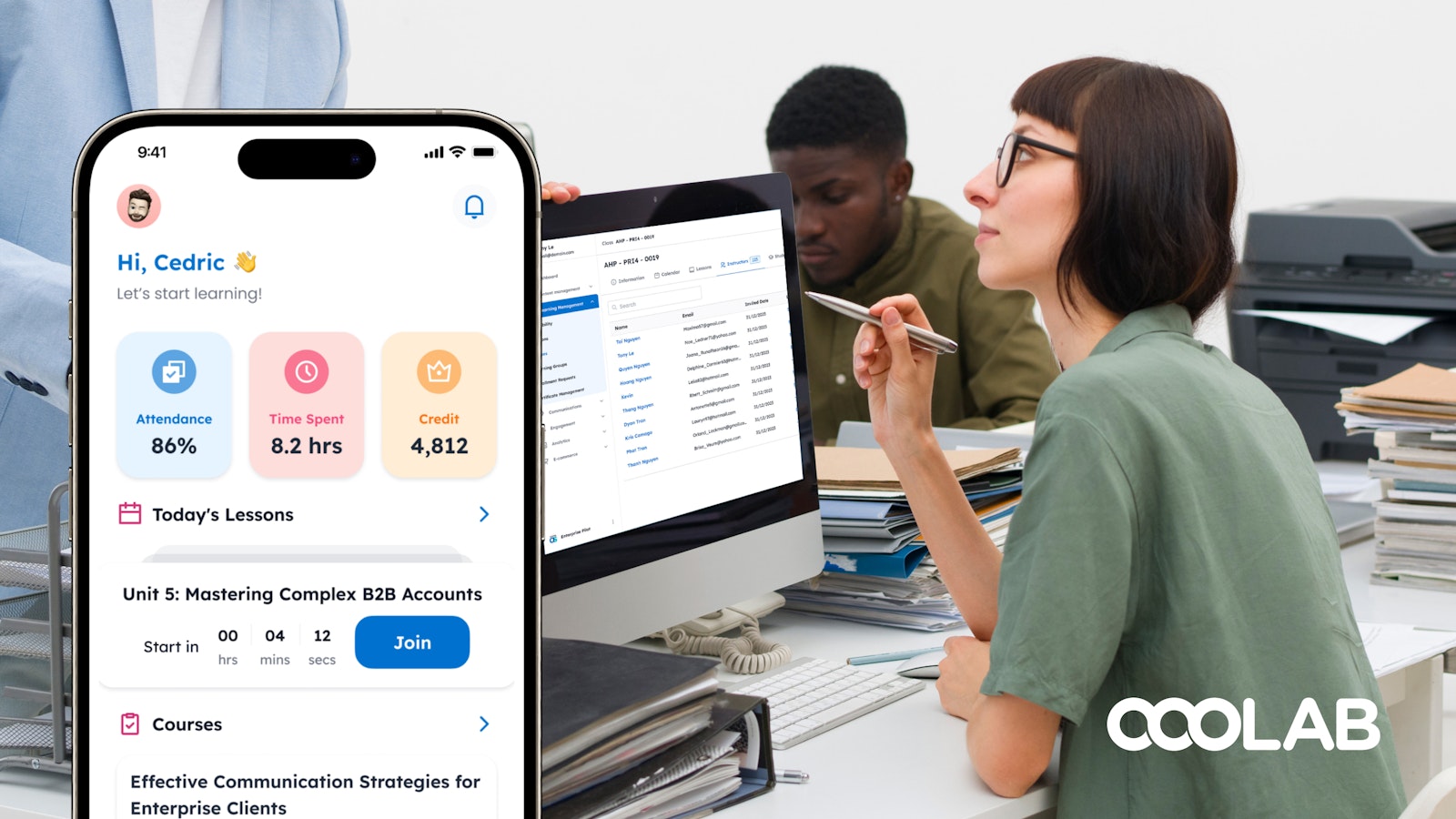
As organizations adapt to rapid technological advancements, scaling learning effectively has become a cornerstone of success. In 2024, enterprise learning management systems (LMS) are no longer optional but essential for businesses aiming to stay competitive. An Enterprise LMS streamlines training processes, boosts engagement, and provides data-driven insights to optimize learning outcomes.
This guide explores how an Enterprise LMS can transform learning at scale and drive measurable business impact in 2024.
I. What Is an Enterprise LMS?
An Enterprise LMS is a comprehensive software platform designed to manage, deliver, and track learning programs at scale. Unlike traditional LMS solutions, Enterprise LMS platforms cater specifically to large organizations with complex training needs, offering scalability, customization, and integrations with existing business systems.


Mobile Accessibility: Enables learners to access content on the go via smartphones or tablets, ensuring flexibility and convenience.
Collaboration Tools: Facilitates peer-to-peer learning and knowledge sharing through discussion forums, group projects, and social learning features.
Compliance Management: Automates compliance training and generates reports to ensure adherence to industry regulations.
To dive deeper into the fundamentals of an LMS, visit this comprehensive LMS overview.
Enterprise learning needs have evolved significantly. In 2024, several trends emphasize the importance of robust LMS platforms:
Hybrid Workforces: The rise of remote and hybrid work has fundamentally changed how organizations approach training. Distributed teams require centralized platforms to ensure consistent learning experiences. Enterprise LMS platforms make it possible to deliver training content seamlessly across geographies, enabling employees to access resources anytime, anywhere.
Upskilling and Reskilling: Rapid technological advancements and shifting job roles have created an urgent need for upskilling and reskilling. Employees must stay current with emerging tools and methodologies, and organizations must ensure their workforce remains competitive. An Enterprise LMS provides structured learning paths and targeted training programs to address skill gaps efficiently.
AI Integration: AI-powered LMS tools are revolutionizing the learning experience. By analyzing learner behavior, AI can personalize content delivery, recommend relevant courses, and provide real-time feedback. This not only improves engagement but also ensures that employees receive training tailored to their unique needs, maximizing the value of learning programs.
Data-Driven Decisions: Modern businesses demand measurable outcomes from their training initiatives. Advanced analytics capabilities in Enterprise LMS platforms enable L&D teams to track metrics such as course completion rates, learner engagement, and performance improvements. These insights help organizations refine their strategies, justify training investments, and demonstrate ROI effectively.
To truly transform learning, an Enterprise LMS must offer the following features:
Scalability: Support for thousands of users across multiple regions. Scalability ensures that organizations can train employees globally without system performance issues. Whether onboarding new hires or delivering compliance training, a scalable LMS adapts to growing business needs while maintaining smooth operations.
System Integrations: Compatibility with CRMs, HR systems, and other enterprise tools to ensure seamless workflows. For example, integration with a CRM allows sales teams to access product training directly within their workflow, while HRIS integration ensures employee training records are automatically updated. This interconnectedness reduces redundancy and enhances operational efficiency.
Customization: Tailor branding, courses, and dashboards to align with organizational goals. Customization ensures the LMS reflects your company’s unique culture and training objectives. From branded interfaces to role-specific learning paths, customization enhances relevance and user experience, making the platform more engaging and effective.
Advanced Analytics: Track metrics like completion rates, engagement levels, and ROI. Analytics dashboards provide actionable insights that empower L&D teams to evaluate the success of training programs. By identifying trends and gaps, organizations can fine-tune their strategies to maximize learning impact and demonstrate clear ROI to stakeholders.
AI-Powered Personalization: Curate content recommendations and adapt learning paths to individual users. AI enhances learning efficiency by analyzing data such as user preferences, skill levels, and past performance. This enables the LMS to recommend relevant courses, set personalized goals, and provide feedback tailored to each learner’s needs, fostering a more effective and enjoyable learning experience.
Mobile Accessibility: Ensures employees can learn anytime, anywhere. A mobile-friendly LMS enables employees to complete training on their devices, making it ideal for hybrid and remote work environments. This flexibility increases participation rates and allows learners to progress at their own pace.
Collaboration Tools: Encourages team-based learning and peer engagement. Discussion boards, live webinars, and group projects promote knowledge sharing and collective problem-solving, enriching the learning process. These tools foster a sense of community and collaboration, essential for modern workplaces.
Compliance Management: Automates mandatory training and regulatory tracking. Compliance features ensure that employees complete required training on time, while robust reporting tools simplify audits and reduce the risk of non-compliance. This is particularly critical for industries with stringent regulatory requirements.
An Enterprise LMS supports diverse training programs, including:
Sales Training: Empowering sales teams with product knowledge, role-play simulations, and AI feedback tools to improve performance. Effective sales training not only equips employees with critical skills but also enhances customer interactions and boosts revenue. Advanced AI-driven LMS platforms analyze individual sales techniques, offering personalized feedback and suggestions for improvement. Read about AI-driven sales training on McKinsey’s website.
Onboarding: Simplifying and accelerating the onboarding process for new hires. A robust LMS streamlines onboarding by providing new employees with structured learning paths, introductory videos, and interactive courses. This ensures they quickly understand company policies, workflows, and culture, reducing the time it takes for them to become productive team members. Automated tracking tools also help HR teams monitor progress and identify areas where additional support may be needed.
Compliance Training: Ensuring employees meet regulatory standards. Industries such as healthcare, finance, and manufacturing often require strict adherence to compliance protocols. An Enterprise LMS automates the delivery and tracking of compliance training, ensuring employees complete mandatory courses on time. Features such as certifications, quizzes, and audit-ready reporting simplify the process and reduce the risk of regulatory violations.
Leadership Development: Developing future leaders with targeted training modules. Leadership development programs focus on building skills such as decision-making, team management, and strategic thinking. An LMS can deliver self-paced modules, live webinars, and mentorship opportunities to prepare high-potential employees for leadership roles. Interactive case studies and real-world scenarios help learners apply their knowledge in practical settings.
AI Training Tools: Providing role-play practices and assessments. AI-powered training tools simulate real-world scenarios, enabling employees to practice their skills in a controlled environment. For example, sales representatives can role-play customer interactions while receiving instant feedback on their performance. Similarly, managers can practice conflict resolution or negotiation techniques through interactive simulations. These tools not only enhance learning but also build confidence and proficiency in critical tasks.
By catering to these diverse training needs, an Enterprise LMS becomes an invaluable tool for organizations striving to maintain a skilled, compliant, and motivated workforce. For insights into leadership training strategies, visit Harvard Business Review’s guide to leadership development.
Implementing an Enterprise LMS offers numerous advantages, including:
Enhanced Engagement: Interactive content, gamification, and AI-based personalization keep learners motivated. Features like badges, leaderboards, and simulation-based learning ensure that employees remain actively engaged with the material. By providing instant feedback and rewards, an Enterprise LMS fosters a sense of achievement and continuous learning.
Cost Savings: Reduces reliance on in-person training sessions and cuts travel expenses. With centralized online content delivery, organizations save significantly on logistical costs associated with traditional training. Additionally, employees can learn at their own pace, reducing downtime and improving productivity.
Consistency: Delivers standardized training across global teams. No matter where employees are located, an Enterprise LMS ensures that all learners receive the same quality of training, aligned with organizational objectives. This consistency is crucial for maintaining compliance and upholding company standards.
Performance Metrics: Tracks learner progress and identifies skill gaps. Advanced analytics tools allow organizations to monitor individual and team performance, enabling data-driven decisions to refine learning strategies. By identifying trends and bottlenecks, businesses can continuously improve their training programs for better outcomes.
Flexibility and Accessibility: Learners can access training materials anytime, anywhere, making it ideal for hybrid and remote work environments. Mobile-friendly LMS platforms ensure employees can learn on-the-go, increasing participation and knowledge retention.
Improved Compliance: Automated tracking and reporting features ensure that employees complete mandatory compliance training on time. This reduces the risk of non-compliance and legal issues while simplifying audits.
Identify Goals: Define what you aim to achieve, whether it’s improved compliance or better onboarding.
Evaluate Features: Prioritize features that align with your goals (e.g., AI-driven insights, mobile accessibility).
Vendor Research: Compare vendors based on reviews, case studies, and demos.
Consider Scalability: Ensure the platform can grow with your organization.
Request Demos: Test the LMS with real-world scenarios.
Successful LMS implementation involves careful planning and execution:
Strategic Rollout: Launch the LMS in phases, starting with a pilot program.
Stakeholder Buy-In: Engage leaders and employees to ensure alignment.
User Adoption: Provide training and support for seamless adoption.
Measure Success: Use analytics to evaluate program effectiveness and iterate as needed.
The landscape of enterprise learning is constantly evolving. Key trends for 2024 include:
AI and Machine Learning: Enhancing personalization, content curation, and learner engagement. AI-driven algorithms analyze user data to recommend tailored learning paths, identify knowledge gaps, and deliver real-time feedback. These advancements ensure that each learner’s journey is unique and impactful, reducing time-to-competency and boosting overall program effectiveness.
Immersive Learning: Augmented Reality (AR) and Virtual Reality (VR) are redefining hands-on training experiences. From virtual simulations to interactive scenarios, these technologies provide learners with a risk-free environment to practice and refine their skills. For example, medical professionals can perform simulated surgeries, while engineers can troubleshoot equipment in a virtual space, making immersive learning an indispensable tool for high-stakes industries.
Gamification: Driving motivation through rewards and challenges. Gamification transforms mundane training into an engaging experience by incorporating elements like leaderboards, achievement badges, and challenges. This approach not only sustains learner interest but also fosters healthy competition among peers, encouraging continuous improvement and collaboration.
Sustainability: Prioritizing eco-friendly training solutions. With organizations increasingly focused on reducing their carbon footprint, LMS platforms are adopting digital-first strategies to minimize paper-based training and travel requirements. Sustainable practices, such as hosting virtual training sessions and leveraging cloud-based solutions, align with corporate social responsibility (CSR) goals and appeal to environmentally conscious employees.
In 2024, an Enterprise LMS is no longer a luxury but a necessity for organizations aiming to scale learning and drive measurable impact. By investing in the right LMS, businesses can enhance productivity, foster continuous learning, and achieve strategic goals.
Are you ready to transform learning at scale? Start exploring the best Enterprise LMS solutions today to stay ahead in the competitive landscape.
At OOOLAB (pronounced 'uːlæb'), our mission is to make complex learning operations simple. We aim to positively impact the lives of over 1,000,000 learners and educators by the end of 2026.
OOOLAB's LearningOS provides educational institutions and corporate enterprises with an all-in-one solution to create and deliver engaging learning experiences.
Reach out to us at: Linkedin, FaceBook
LearningOS is a complete, enterprise-grade learning platform that’s secure, intuitive, and effective.
Core capabilities:
Course Creation & Management (CMS) – Build interactive and engaging courses and learning paths quickly without technical skills.
Training Delivery (LMS + LXP) – Deploy and manage training that learners actually want to complete. Track progress, manage certifications, and run your entire training operation from one place.
Mobile & Web Access (Learner Portal) – Learners can train anywhere, anytime, and on any device using iOS, Android, or desktop.
Enterprise Security – SOC 2 Type 2, ISO 27001, and GDPR certified to meet your compliance requirements.
What this means for you: One platform replaces multiple tools, your team launches training faster, and learners engage more because it’s easy to use.
1. Enterprise & Multinational Corporations – Employee development, compliance training, and onboarding across global teams.
2. Business Processing Outsourcing (BPO) — sales training, customer service, technical support training, customer product knowledge training
3. IT & Technical Services – Technical certifications, process training, and upskilling programs 4. that boost efficiency.
4. Technology & SaaS – Product training, technical support, technical training, and customer education for software companies.
5. Financial Services & Banking – Regulatory compliance, customer service training, and product knowledge for banks, insurance, and fintech companies.
6. Retail – Customer service, product knowledge, and sales training for store staff and new hires.
7. Manufacturing – Safety protocols, equipment operation, and certification/quality control training for employees, distributors, and partners.
8. Healthcare – Non-medical staff training, compliance certifications, and continuing education for hospitals and clinics.
9. Associations & Nonprofits – Member certifications, continuing education, and professional development programs.
10. Franchises & Multi-Location Businesses – Consistent training and onboarding across all locations for education centers, restaurants, hospitality, and retail chains.
LearningOS works for any organization that needs to train employees, partners, or customers at scale. Whether you’re just starting to formalize your training or replacing an outdated system, our platform grows with you.
LearningOS is an especially great fit for:
1. Mid-size to large companies with 500+ employees that need to train multiple groups—sales teams, customer success, partners, or compliance-heavy departments.
2. Companies using multiple training tools that want to consolidate. If different teams are paying for separate platforms, LearningOS can centralize everything and cut costs.
3. Organizations outgrowing their current LMS. If your system is slow, limiting, or can’t handle your growth, LearningOS scales without the headaches.
4. Membership organizations and associations that train large networks of partners, resellers, or franchisees across different regions.
5. Regulated industries like financial services, healthcare, and government that need strict security, compliance tracking, and custom configurations.
LearningOS was built to power enterprise learning at scale and supports organizations with more than 100,000+ employees. LearningsOS helps you manage the complexity of multi-regional operations, diverse compliance requirements, and varied learning needs. Whether you’re operating across 5 or 50 locations, you’ll maintain training consistency, ensure regulatory compliance, and upskill your entire workforce to achieve business goals. You can finally have your L&D become a revenue driver.
Typically, OOOLAB’s LearningOS is best suited for companies who are:
Training at least 500+ learners, which can represent a combination of clients, partners and employees.
On pace to outgrow their existing LMS and require a more sophisticated and flexible system that can match their organization’s growth trajectory.
Extending their L&D programs across multiple business units.
Possibly translating their learning content into other languages.
Organizations that meet these criteria find OOOLAB’s LearningOS extremely valuable for the price.
Leading Fortune 1000 enterprises and publicly-listed companies across 23 countries rely on LearningOS to maintain competitive advantage through continuous workforce development. With 3,000+ instructors and 250,000+ employees already on the platform, you’re joining organizations that have proven the ROI of strategic learning investment—reducing turnover, accelerating promotions from within, and building institutional knowledge that drives sustainable growth.
We’re a complete solution, not just software. You get the platform plus the support to actually achieve your training goals.
What sets us apart:
1. Dedicated Learning Consultant & Attentive Support – An experienced operator backed by a professional support team that knows your business and makes sure you’re getting real ROI and value, not just using features.
2. Professional Services team – If you need it, we can build your courses, create custom features, or develop integrations you need—so you’re not stuck doing it all yourself.
3. End-to-end partnership – From setup to scaling, we handle the heavy lifting so your team can focus on results, not troubleshooting.
Bottom line: You’re not buying software and figuring it out alone. You’re getting a partner invested in your success.
LearningOS pays for itself and helps you achieve your business goals by significantly reducing training overhead and directly improving business performance. Our clients see an average 3x ROI on their investment.
The impact:
More selling and better experiences, less admin – sales and CS teams spend time with customers, not stuck in training tasks.
Faster skill development – Close capability gaps in weeks, not months, so teams perform better sooner with more confidence and competence.
Lower training costs – Automate what used to require dedicated staff time and resources.
Proof of impact – Track exactly how training drives revenue, retention, and productivity with built-in analytics.
Real outcome: Higher revenue per employee, lower cost per trained worker, and data that proves training is actually working.
LearningOS supports many integrations, including:
Content authoring tools
HRIS systems
Single Sign-On (SSO)
CRM systems
Enterprise messaging platforms
LMS data warehouses
OOOLAB’s LearningOS team can also support (and build) custom integrations for virtually any software tool.
Most clients typically sign a 3-5 year contract with OOOLAB’s enterprise LearningOS. However, the minimum contract length is only a single year.
LearningOS uses a straightforward subscription model based on the number of users. You commit to a minimum number of user licenses for a set period (typically 1-5 years) and pay a monthly, quarterly, or annual fee per user. For example, you might commit to 500 users for 3 years at a fixed per-user rate.
Key points:
One subscription price for all user types – admins, instructors, and learners all count the same.
Volume discounts – Larger user commitments get lower per-user pricing.
Flexible scaling – If you exceed your committed user count, you’re only billed for the additional users at your contracted rate.
Predictable costs – Your per-user price stays fixed for the length of your contract.
LearningOS onboarding typically takes 3-12 weeks and follows these steps:
1. Consultation call – We discuss your training goals, who needs to be trained, and what success looks like (ROI/impact).
2. Requirements review – We identify which features, integrations, and customizations you need and by when.
3. You’ll see a customized demo using your actual use cases—not generic features.
4. Platform setup – We configure user roles, customize your interface, and connect to your existing systems (HRIS, CRM, SSO, etc.).
5. Content migration – We help move your existing courses, videos, quizzes, and user data into LearningOS.
6. Admin training – We train your team on how to create courses, manage users, and run reports.
7. Integration testing – We test all connections to ensure data flows smoothly between systems.
8. User import – We upload your learners in bulk or set up automated syncing from your HR system.
9. Quality check – We test everything to make sure the platform works exactly as you need.
10. Go-live support – Dedicated support during and after launch with fast response times to any issues.
11. Ongoing assistance – Additional training sessions, integration help, or professional services as your needs evolve.
12. Most clients see positive ROI within 6-12 months.
You can begin by scheduling a free consultation to assess your enterprise’s training needs and we’ll answer any questions you may have.